


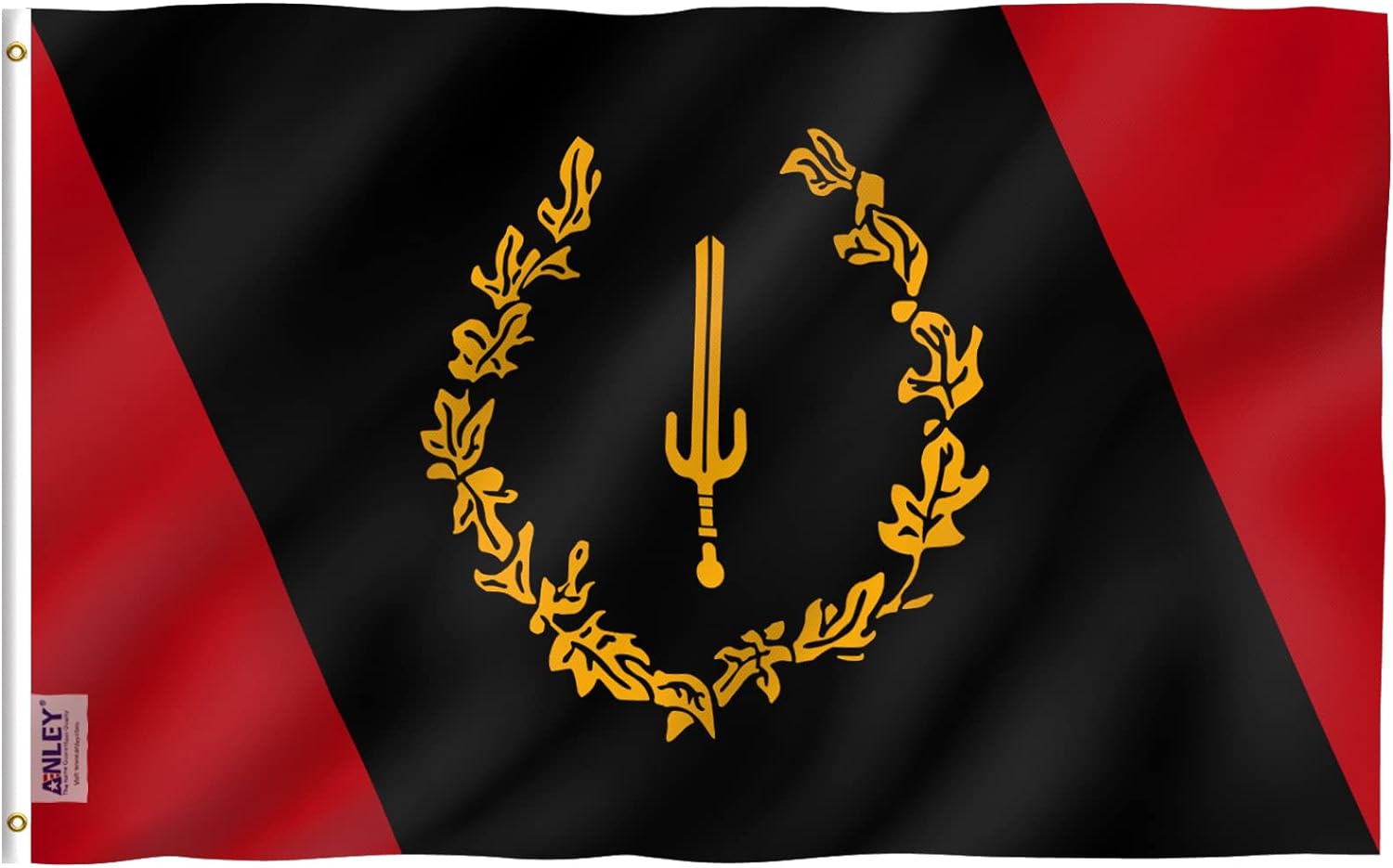


c. 1300 – 1896
Oyo Empire
The cavalry power of the forest edge, governed by a constitutional council with the authority to depose its own king, and heir to the sacred kingship of Ile-Ife.
Yorubaland — south-western Nigeria and Benin
All empires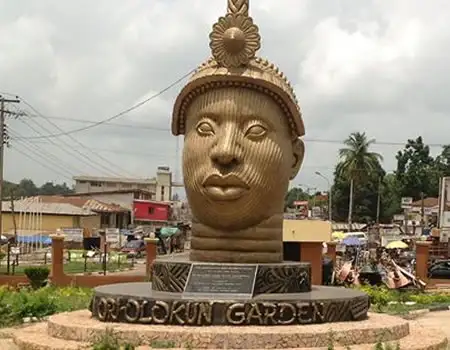
- Capital
- Oyo-Ile (Katunga), later New Oyo
- Sovereign
- The Alaafin, descended from Oranmiyan of Ile-Ife
- Council
- The Oyo Mesi, seven kingmakers led by the Bashorun
- Army
- Heavy cavalry under the Are-Ona-Kakanfo
Deep history
Ife, the source
Yoruba tradition places creation at Ile-Ife, where Obatala or Oduduwa descended and the world was formed. Between roughly 1100 and 1400 CE Ife's artists cast copper-alloy and terracotta heads of such naturalism that when Leo Frobenius encountered them in 1910 he insisted they must be Greek — a reflex that says more about Europe than about Ife. Oranmiyan, a son of Oduduwa, founded Oyo and also gave Benin its Eweka dynasty, tying Yoruba and Edo royal lines to a single origin.
The cavalry state
Oyo sat at the northern edge of the forest where horses could survive the tsetse belt. Importing mounts across the savannah, the Alaafins built the only major cavalry force in the region and used it to dominate the corridor to the coast, subordinating Dahomey as a tributary in the eighteenth century and holding a domain reaching the Volta.
A constitution of checks
The Alaafin ruled with the Oyo Mesi, seven hereditary kingmakers led by the Bashorun who selected each new king from eligible royals. If the council judged a king to have failed, the Bashorun could present him with an empty calabash or parrot's eggs — an order to take his own life. Above the council stood the Ogboni, a religious council of elders sworn to the earth deity Onile, which could restrain the Oyo Mesi in turn. Provinces were governed by Ajele residents reporting to the capital, and Ilari palace officials carried royal authority into the districts.
Religion and art
The orisha system — Shango the fourth Alaafin deified as the lord of thunder, Ogun of iron, Osun of the river, Yemoja of waters, Esu of the crossroads — and the sixteen-principle Ifa divination corpus of the Odu form one of the most elaborate religious and philosophical systems on the continent. Carried across the Atlantic, it survives as Santería in Cuba, Candomblé and Umbanda in Brazil, and Vodun and its relatives across the Caribbean.
Collapse
The late eighteenth century brought a struggle between Alaafin and Bashorun that broke the constitutional balance. Afonja, the Are-Ona-Kakanfo at Ilorin, revolted and allied with Fulani jihadists who then took Ilorin for themselves. Dahomey stopped paying tribute. Oyo-Ile was abandoned around 1835 and the state moved south to New Oyo, its refugees founding Ibadan and Abeokuta. The empire ended formally under British protectorate in 1896, but the Alaafin's stool endures.
Paternal lineages
E1b1a (E-M2 / E-M180) reaches very high frequency among Yoruba populations; the Yoruba are among the most intensively sequenced populations in human genomics through the HapMap and 1000 Genomes reference panels.
Other empires
Kemet
c. 3150 BCE – 30 BCE
Egypt & Nubia, the Nile Valley
Axum
c. 100 CE – 940 CE (roots to D'mt, c. 980 BCE)
Ethiopia & Eritrea, the Horn of Africa
Mali Empire
c. 1235 – 1670
Western Sudan — Mali, Senegal, Guinea, Gambia, Mauritania
Kongo Empire
c. 1390 – 1914
Central Africa — DR Congo, Republic of Congo, Angola, Gabon
The Moors
711 – 1492 and beyond
North Africa, the Sahel, Borgu, Mali and Iberia