


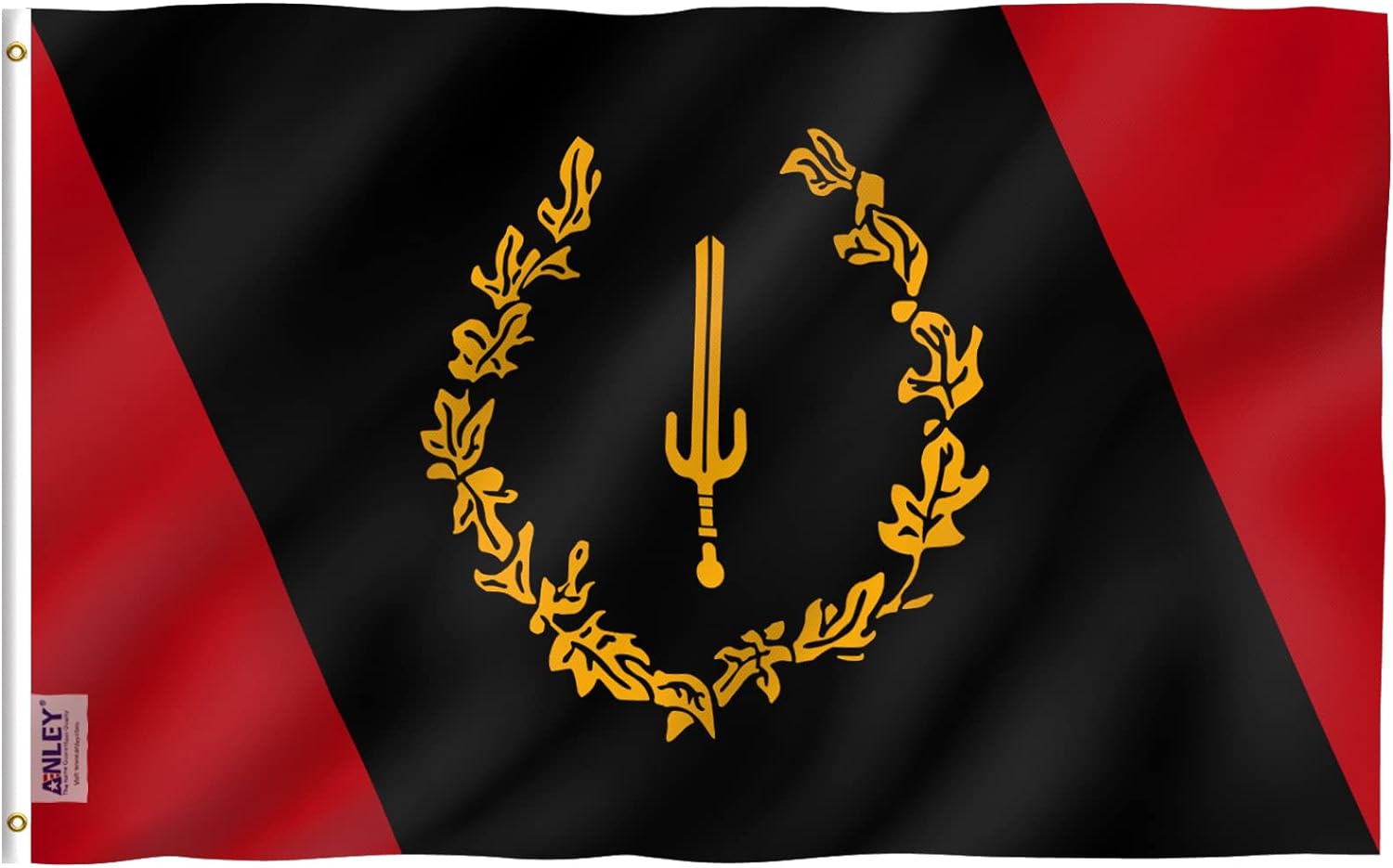


c. 100 CE – 940 CE (roots to D'mt, c. 980 BCE)
Axum
One of the four great powers of the ancient world according to the Persian prophet Mani, a Red Sea empire that minted its own gold coinage and raised the tallest monoliths ever quarried.
Ethiopia & Eritrea, the Horn of Africa
All empires
- Capital
- Axum, later Kubar; port of Adulis on the Red Sea
- Script
- Ge'ez, an indigenous Ethiopic syllabary still in liturgical use
- Currency
- Gold, silver and bronze coinage from the reign of Endubis, c. 270 CE
- Reach
- Ethiopia, Eritrea, Sudan, Djibouti, Yemen and coastal Arabia
Deep history
Before Axum: D'mt
The kingdom of D'mt held the northern Ethiopian highlands from around the tenth century BCE, farming with irrigation and iron and building temples such as Yeha, whose sandstone walls still stand without mortar. When D'mt declined, smaller polities competed until Axum consolidated the highlands and the Red Sea trade behind them.
The Red Sea empire
From the port of Adulis Axum sold ivory, gold, obsidian, incense, rhinoceros horn and emeralds into the Roman and Indian Ocean systems and imported textiles, glass and iron. The first-century Periplus of the Erythraean Sea already names the ruler Zoskales as literate in Greek. In the third century Mani listed Axum with Rome, Persia and China as one of the four great kingdoms of the world.
The stelae
Axumite masons cut single blocks of granite into carved multi-storey tower monuments — the Great Stele, 33 metres and roughly 520 tonnes, is the largest single stone block humans have ever attempted to raise. The standing stele of King Ezana rises 24 metres and imitates a nine-floor palace with false doors and windows.
Ezana and the turn to Christianity
In the fourth century King Ezana converted, making Axum among the earliest states anywhere to adopt Christianity officially; his coins swap the disc and crescent for the cross. The Ethiopian Orthodox Tewahedo Church that follows preserved the Book of Enoch and Jubilees in Ge'ez when they were lost elsewhere, and Ethiopian tradition holds that the Ark of the Covenant rests at the Church of Our Lady Mary of Zion in Axum, brought by Menelik I, son of Solomon and Makeda, queen of Saba.
Arabia, Kush and decline
Axum destroyed what remained of Meroë in the fourth century and in 525 CE the general Abraha crossed into Yemen and ruled Himyar, projecting African power across the strait. The rise of the Islamic caliphates redirected the Red Sea trade; Axum's ports withered, the capital moved inland and the state gave way to the Zagwe dynasty, whose rock-hewn churches at Lalibela were cut downward out of living stone, and then to the Solomonic dynasty that claimed descent from Menelik and ruled until 1974.
The first hijra
In 615 CE, when the earliest Muslims were persecuted in Mecca, the Prophet sent them to the Christian Axumite king Armah — the Najashi — who refused to surrender them. That refuge is the reason Islamic tradition holds Abyssinia in singular respect.
Paternal lineages
E1b1b (E-M78, E-V32) is the dominant paternal lineage of the Horn; A lineages persist among Nilotic neighbours, with J1 reflecting long Red Sea contact with Arabia.
Other empires
Kemet
c. 3150 BCE – 30 BCE
Egypt & Nubia, the Nile Valley
Mali Empire
c. 1235 – 1670
Western Sudan — Mali, Senegal, Guinea, Gambia, Mauritania
Oyo Empire
c. 1300 – 1896
Yorubaland — south-western Nigeria and Benin
Kongo Empire
c. 1390 – 1914
Central Africa — DR Congo, Republic of Congo, Angola, Gabon
The Moors
711 – 1492 and beyond
North Africa, the Sahel, Borgu, Mali and Iberia