




Ghost DNA
The Ghost Ancestor of West Africa
An unknown archaic lineage in West African genomes — and the oral traditions that named it long before genetics did.
Sriram Sankararaman, a UCLA computer scientist and professor of human genetics and computational medicine, led a study that found “ghost” DNA in West Africans. The study’s findings were published in the journal Science Advances in 2020.
The researchers tested West Africans in Nigeria from the Yoruba and Esan, in Sierra Leone from the Mende, and western groups from The Gambia.
The study found that 2% to 19% of the genetic ancestry of some West Africans comes from this “ghost population.” The researchers estimated that interbreeding between the ghost population and modern humans occurred around 43,000 years ago.
While Europeans carry ancestry from Neanderthals and Asians carry ancestry from Denisovans, West Africans appear to descend in part from a completely different ancestor that is not Homo sapiens (modern human), Neanderthal or Denisovan.
All African cultures, especially those of West Africa, hold oral traditions of beings descending from the sky and giving them esoteric wisdom, science, technology, spirituality, architecture and more.
The clearest examples are the Dogon, Benin and Yoruba. The ancestors of the Yoruba and Benin have spoken of their forebears as divine beings for centuries, and today modern science has confirmed an unexplained lineage. Scientists are unable to determine where this DNA came from because it comes directly from the heavens, from the greater universe.
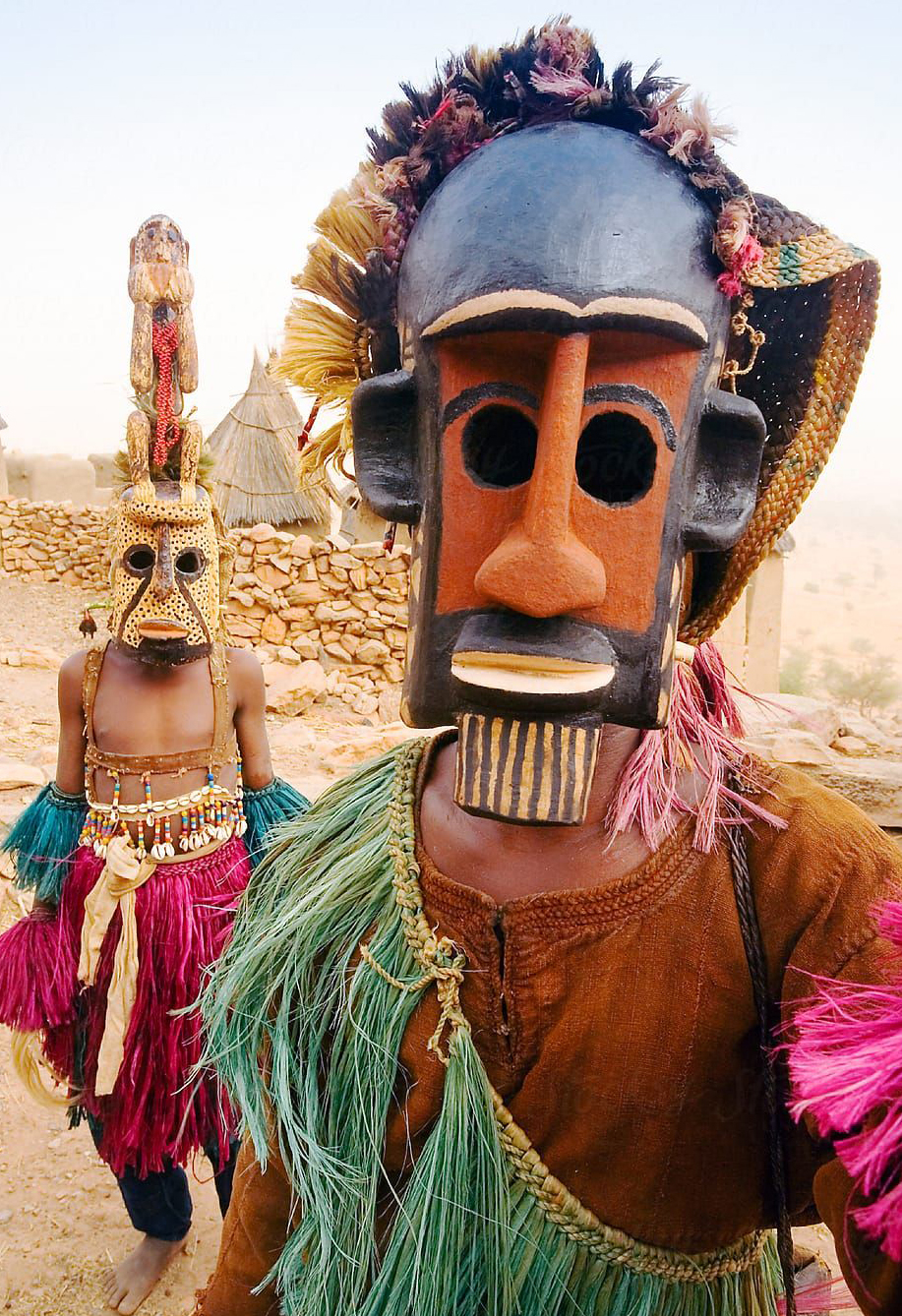
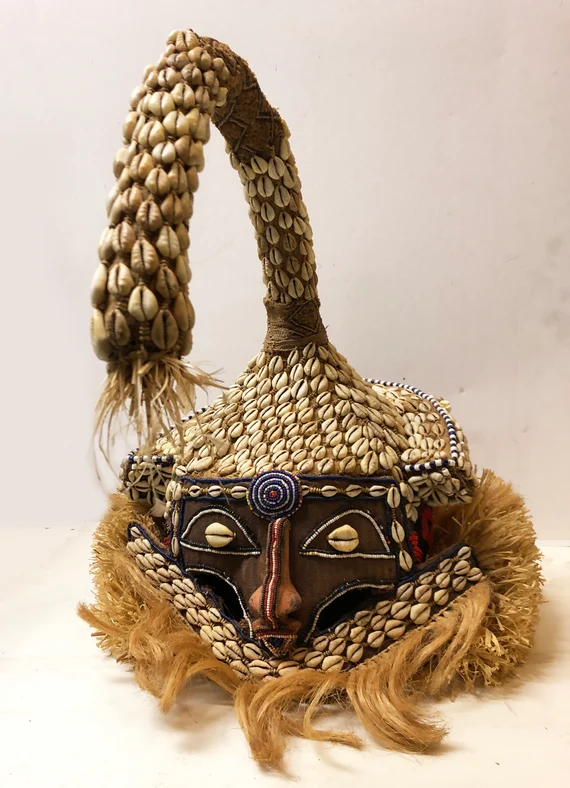
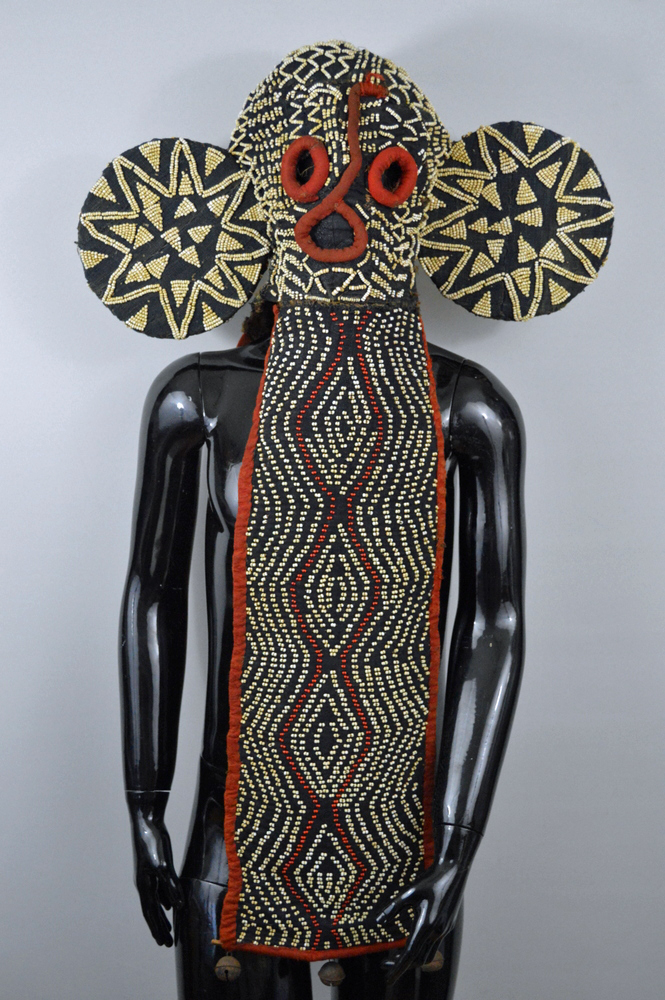
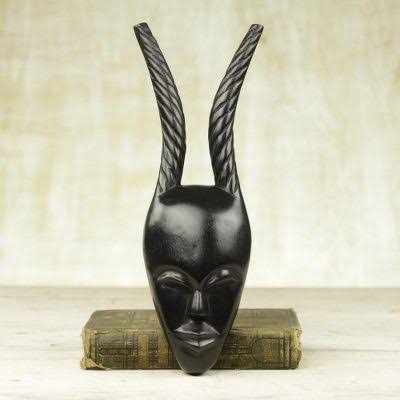
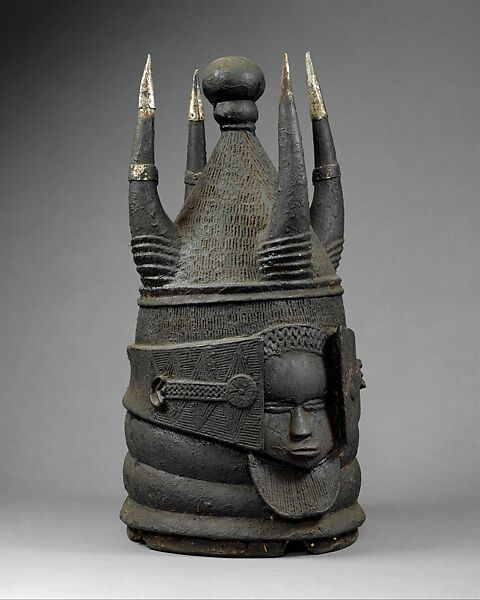
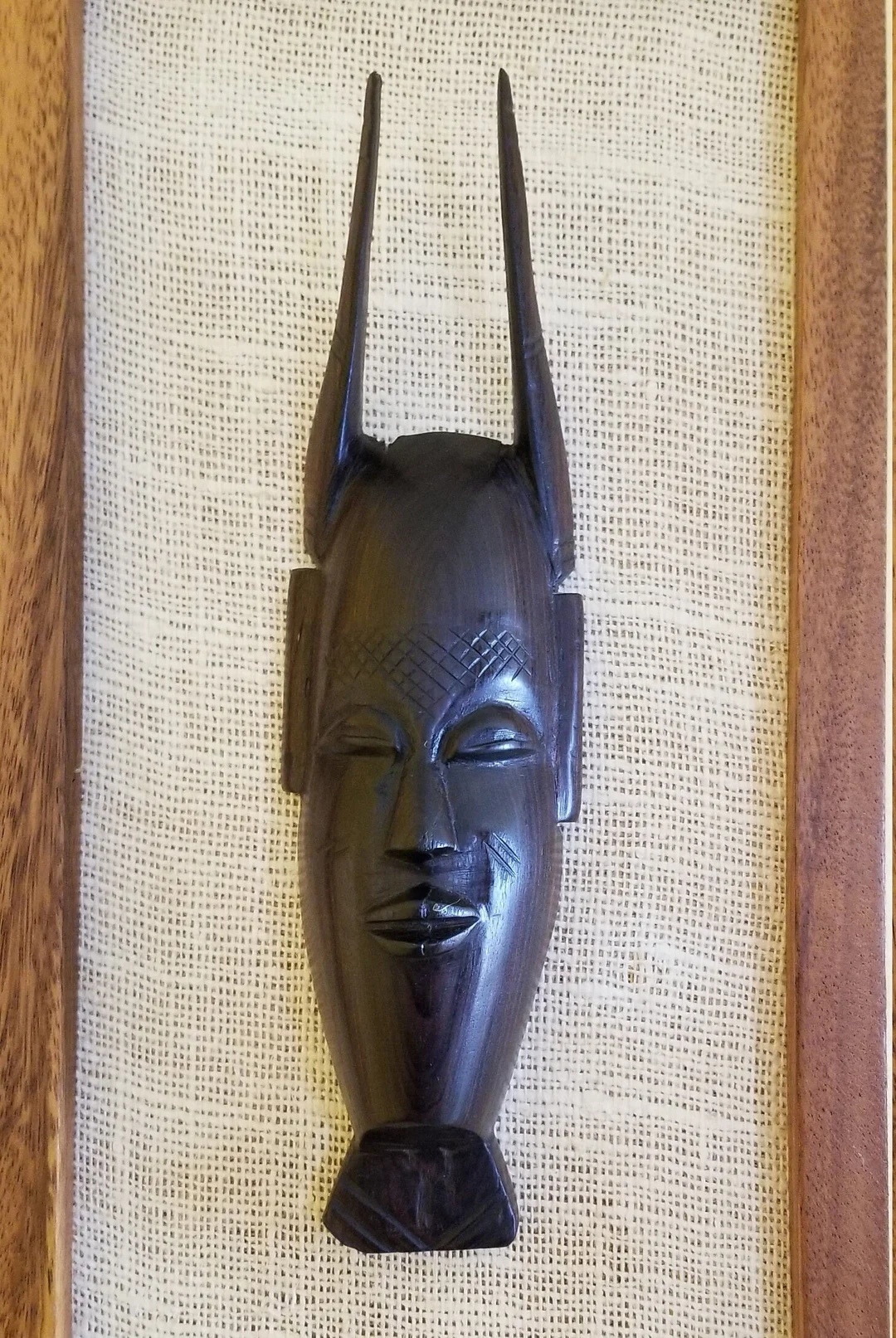
Though the ghost DNA study has so far been limited to the Yoruba and the Mande, the ancestry itself is likely not limited to these groups, but present in many — if not all — ethnic groups across Africa. When you look at the traditional masks and art found throughout the continent, they often depict something otherworldly or non-human. Artistic creativity is always derived from a source. In the ancient world, where television, media and entertainment did not exist, the beings being described would have had to be experienced in real time for an artist to depict them through a mask.
Masks of the Ancestors
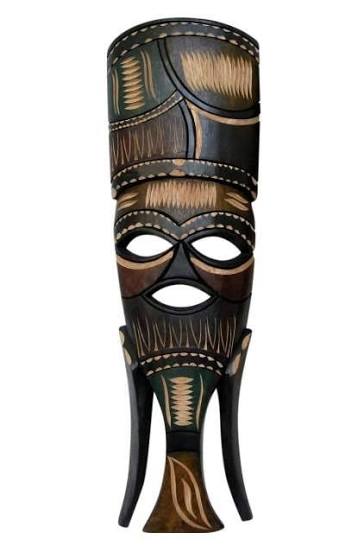
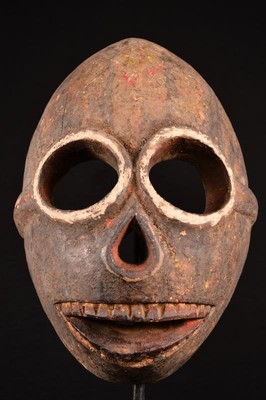
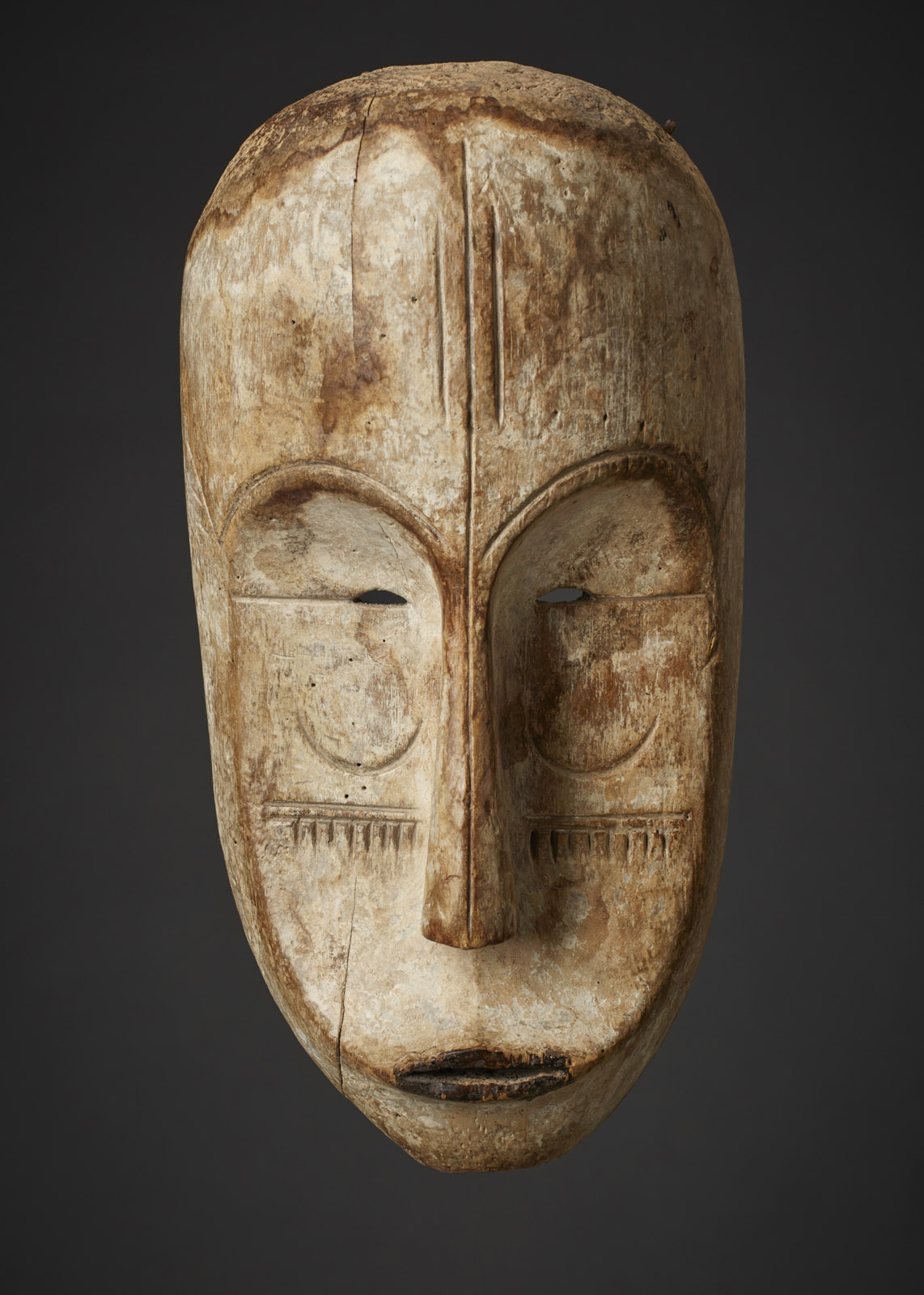
The Divine DNA of the Yoruba & Edo People
Two Cosmologies, One Origin
Oduduwa, as known by the Yoruba people, was said by some to have descended from heaven, and by others to have been an extraordinary man of renown blessed by the gods.
He is the common ancestor of both the Yoruba and the Edo, and though his origin is disputed by both groups, what if his origin is intertwined between both cosmologies? In reality, both sides may hold missing pieces to each other’s puzzles.
Though it is heavily disputed, it is very likely that the Edo and Yoruba share a common ancestor pre-Oduduwa, and that shared commonality may be the Ogiso.
The Ogiso of Igodomigodo
Before the Benin dynasty there was the dynasty of Igodomigodo, and its rulers were called Ogiso. In the oral traditions of Benin there were 31 Ogiso rulers. The first ruler and founder of the kingdom was Igodo, and the last ruler was Owodo.
In Benin tradition Oduduwa was the son of Ogiso Owodo, grandson of Ogiso Arigho, great-grandson of Ogiso Obioye, and 2x great-grandson of Ogiso Oduwa. Oduduwa’s name is a clear derivative of his 2x great-grandfather Oduwa; the names Owodo, Oduwa and Oduduwa all maintain a consistent structure and sound.
The Yoruba argue that Oduduwa is a Yoruba name, but when we set aside our biased emotions and look at what history presents, the structure of the name is consistent with the culture of Igodomigodo. Igodomigodo also predates Oyo, which supports the conclusion that the name Oduduwa and the phonetics within it are of Benin origin.
The Exile of a Prince
Owodo had only one son, named Ekaladiran. He was exiled from the kingdom because of a deceitful action of the king’s wife. The palace guards who were ordered to take him into the bush to be executed also knew of her deceit, and for this reason they spared his life, but warned him never to return to Benin — or his life would be taken and they would be killed as well for not fulfilling the order.
The story goes that Ekaladiran wandered through the bush until finally settling in Ile-Ife.
The Yoruba people had already been awaiting the fulfilment of a prophecy that an extraordinary man would emerge from the bush, take refuge with them, and become their king.
So when Ekaladiran arrived, it was seen as the fulfilment of this prophecy. He had abandoned his Benin name, likely to avoid compromising his true identity and to honour the agreement he had made with the Benin guards.
He told the people of Ile-Ife that his name was Izoduwa — a name meaning “I choose a path of prosperity.” This name may have been chosen to mark his transition from a banished prince who felt he had no control over the tribulations bestowed upon him, to a man who had suddenly found a home and could forge a new path for himself.
When he proclaimed this name, the Yoruba called him Oduduwa. It is said that his name was corrupted into this form by the Yoruba, but it is also possible that he was always Izoduwa and the name became lost in translation over many generations.
The next thing that must be acknowledged is that after the death of Ogiso Owodo, the Benin people heard rumours that Oduduwa had in fact survived and was ruling in Ile-Ife. With no heir to the throne they sought him out, and when they finally found him they requested that he return to Benin as the rightful heir.
Oduduwa refused, for many reasons.
The primary reason was likely that he had been exiled and effectively disowned from his birthright, which would have set him on a journey of hardship, pain and abandonment during the early years of his life, with no family, no sense of belonging, and no settled sense of identity.
Another factor is that he had by then become an established ruler in Ife, with community, family and security. Much time had passed between his exile and his arrival in Ife, so he was now past his prime.
To find a middle ground he made a political move of expansion through his seed, substituting himself with his son Oranyan — known as Oranmiyan — to take the throne of Benin.
It is undeniable, for both the Edo and the Yoruba, that Oranyan ruled in Benin for a short period. This is a major factor supporting the view that Oduduwa was of Benin origin.
Why? Because it is a universal concept and practice that kingship passes down through the blood. Heirs are typically a son, grandson, nephew or cousin of the previous king, but succession is always kept within the family.
With that being said, it would be illogical for the Edo to travel all the way from Benin to seek a ruler from another kingdom who had no royal blood or relation to the previous kings.
The Edo people knew Oduduwa was a child of Benin royalty and therefore fit the necessary criteria to be crowned and to solve the succession problem.
Oranyan was accepted as a substitute because he was a grandson of Ogiso Owodo. He faced hardship ruling in Benin because he had been raised in Yoruba culture, so there were language and cultural barriers, as well as Edo subjects who did not fully agree with his installation on the throne.
Oranyan then decided that only someone from Benin soil should rule over its people, and abdicated the throne.
Before leaving, he had fathered a child with a Benin woman who gave birth to a son named Eweka, and this child would grow up to become the new king of Benin. The Ogiso dynasty ended and the Oba dynasty began.
When Oranyan returned to Yorubaland, he fathered Shango, who would become Alaafin of Oyo and who would later be deified as the Orisha of thunder and fire.
Descending from Orun
In Yoruba tradition, Oduduwa is a divine figure who descended from Orun — heaven. This is only half true, and here is why. Oduduwa, son of Owodo and descendant of Oduwa, was originally born a prince of the Ogiso dynasty. What does Ogiso mean? “King of the Sky.”
The primordial spirit of Oduduwa did indeed descend to Earth during the era of the Irunmole, when creation took place. Oduduwa the man may not himself have come from the sky, but his ancestors did. This type of story is recorded not only in Yoruba culture but throughout Africa.
When the Irunmole manifested themselves in the Earth realm, it is likely they would incarnate into a human avatar, and they would have been able to do this at will, at any given time, through their own volition.
As divine beings, it also cannot be ruled out that their lifespans exceeded our own by hundreds or even thousands of years, and that they had the ability to reincarnate into new avatars whenever they felt compelled. This is why every Orisha has both a primordial spirit and a human avatar.
A Timeline We Cannot Trust
Ife is said to have been in existence since 1000 BCE or older, yet the Oduduwa dynasty is not recorded until 1000–1200 CE. Igodomigodo is dated to 40 BCE or older, yet is not recorded by scholars until 900 CE.
I say this to say that we cannot trust biased Eurocentric scholars to construct a timeline for a culture they were not born into. These civilisations, as well as many others in West Africa, are likely much older than what we are told.
Therefore we do not truly know how long people like Igodo and Oduduwa actually lived or reigned, because the real answer could lie beyond human comprehension or beyond our current capacity for what we deem possible.
“But, beloved, be not ignorant of this one thing, that one day is with the Lord as a thousand years, and a thousand years as one day.” — 2 Peter 3:8
The Anunnaki, the Elohim and the Irunmole
In the Book of Enoch from the Ethiopian Bible, it is written that there is a group of angels called the “Watchers,” or the Elohim, who were meant to supervise, guide and evolve mankind through a gradual divine curriculum.
But in Genesis 6:1–4 it says: “And it came to pass, when men began to multiply on the face of the earth, and daughters were born unto them, that the sons of God saw the daughters of men that they were fair; and they took them wives of all which they chose. … There were giants in the earth in those days; and also after that, when the sons of God came in unto the daughters of men, and they bare children to them, the same became mighty men which were of old, men of renown.”
In Sumerian tradition there are oral accounts of divine or extraterrestrial beings called the Anunnaki, who came to Earth and taught mankind advanced sciences, spirituality and civilisation. Anunnaki translates to “those who descended from heaven (Anu) to Earth (Ki).”
Anunnaki is an umbrella term that refers to various beings: the Elohim of the Abrahamic religions, the Irunmole of Yoruba culture, the Devas of Hinduism, and the Neteru of ancient Kemet — commonly called Egypt today.
After the Anunnaki intermixed with humans, they produced a hybrid race called the Nephilim, mentioned in the Bible, who were essentially demigods — half divine and half man. It is even said that they may have tampered with our DNA through genetic engineering.
The Nephilim were giants who walked the earth and possessed supernatural abilities, making them extraordinary men. They are possibly equivalent to the Yoruba Orisha who incarnated on Earth, as well as to the early rulers of the Igodomigodo era of Benin and later Oyo.
Though they would later be described as evil, not all of them operated in darkness, because in Genesis they are described positively as “mighty men of renown.” There is always duality in every corner of the universe: some were benevolent and others malevolent.
In this universe duality will always exist. So while there were heavenly beings who descended to earth and created bloodlines that produced chaos and calamity, there were also righteous beings from the heavens who followed divine order and kept our best interest.
In Yoruba tradition the Orisha are described as actual living people, but they were not normal in the slightest degree — they had a divine aura and power that they all possessed. They were master wielders of the natural elements and of metaphysics. They were revered at the level of gods, but still succumbed to the shortcomings and faults of man.
Giants in the Bloodline
The first Ogiso of Igodomigodo was Igodo, also known as Obagodo. In some Edo traditions it is said that he was the son of Osanobua — God in the Edo language, Olodumare in Yoruba, El in Hebrew and Anu in Sumerian.
Igodo, or his ancestors, may actually have been Anunnaki who intermixed with mortal women. These beings were the progenitors of what would become divine kingship on earth, which is why their descendants would bear titles such as Pharaoh or Ogiso.
Remember that the offspring of the Anunnaki were giants. During the Eweka dynasty that succeeded and descended from the Ogiso, Oba Ozolua and Queen Ohonmin bore a son named Arhuanran (Aruan), who was known to be a giant. Legend has it that he uprooted palm trees with his bare hands and swept his father’s compound with the fronds. Only a man of great, abnormal stature would be capable of such a feat. Oba Ozolua ruled in the 1500s, so this story is very recent.
More evidence of Anunnaki and giant ancestry can be seen in Oduduwa’s lineage. His son Oranmiyan was described as a giant. The Opa Oranmiyan is a staff in Ile-Ife once wielded by him, standing between 18 and 20 feet tall; theoretically, for a man to possess a staff that large, Oranmiyan himself would have had to be anywhere from 20 to 25 feet tall. This means Oduduwa himself could have been even larger, and that his ancestors of the Ogiso era still carried strong Anunnaki–Irunmole genes.
Oduduwa is the patriarch of both the Oyo and Edo kingdoms. Oranmiyan fathered both Shango, who became king of Oyo, and Eweka, king of Benin.
Both Oyo and Benin rulers descend from the Ogiso — from the Anunnaki — which is why both bloodlines produced giants and men with supernatural abilities. From the time of Igodo to Arhuanran the giant of Benin, and to Shango and Eweka, it is very likely their divine DNA diluted after intermixing with humans for hundreds of years.
DNA is inherited randomly, however, which explains why rare occurrences of a giant, or of a man with supernatural command over the elements, could still appear. It explains why Oranmiyan is described as a giant while his children are not, or why one son is described as having supernatural abilities while the other is not.
For example, if my great-great-grandfather was 6′5″ tall, unless the following generations reproduced with someone equally as tall or close to it, the chances of me being 6′5″ remain possible but are reduced with each generation.
So the Irunmole — Anunnaki — Elohim were the first generation. Their children became the Ogiso and Orisha of Benin and Yorubaland, and Oranmiyan became the common ancestor of both.
The Three Eras of Ife
The history of Ife can also be divided chronologically into different eras. The first Ife was known as Ife Oodaye, Ile owuro, ibiti oju ti mo — that is, the land of most ancient days, where the dawn of the day was first experienced. The inhabitants of Ife Oodaye were believed to be powerful giants with mystic abilities. Tradition claims that the life of this community came to an end as the result of a flood which flushed the whole area the community occupied.
This correlates with Genesis 6. Ife Oodaye perfectly describes the first generation of the Elohim — Anunnaki — Irunmole. In the Bible, God’s primary reason for flooding the earth was to destroy the evil hybrid races of giants, while likely sparing the righteous, or those with Iwa Pele, alongside certain humans.
Those who survived the flood formed the nucleus of the community that became the second era of the history of Ife.
The second Ife was called Ife Ooyelagbo, that is, the city of the survivors. Tradition maintains that the second Ife lasted until the arrival of strangers who entered the city of Ile-Ife from the “East.”
This description of strangers arriving from the east is a description of Oduduwa arriving from Benin, which lies east of Ife.
Genesis Through Yoruba Eyes
Genesis 1:2 states: “The earth was without form and void, and darkness was upon the face of the deep. And the spirit of Elohim moved across the face of the waters.” In the Hebrew text, spirit is written as ruach — wind or breath. This ruach could represent the Irunmole Oya in her primordial form.
Genesis 1:3: “And Elohim said, let there be light, and there was light.” In Yoruba cosmology Ela is also known as the spirit of light and manifestation, meaning all things came into existence here on Ikole Aye (Earth) by way of Ela.
In Yoruba tradition, the supreme God known as Olodumare sent the Irunmole — the Elohim — to Earth to administer creation upon it. The Irunmole are emanations or aspects of Olodumare, just as the 99 names of Allah are aspects of the one.
The Obatala Theory
The Irunmole of creation on Earth was Obatala, known as the father of all Orisha, who in essence were also manifestations of the primordial Irunmole. His tools of creation were a long gold chain, a snail’s shell filled with sand, a white hen, and a palm nut.
These tools are metaphorical descriptions of advanced technology. Obatala was actually sent to terraform the Earth — in simpler terms, to make it inhabitable for humans.
The gold chain would represent a wormhole or star gate used to travel from another universe into our own and enter the Earth realm, thus descending from heaven or space to Earth. In Sumerian myth the Anunnaki used gold to stabilise planetary atmospheres, and in Hindu vimana texts gold alloys were used in craft hulls for their resonant conductivity.
Obatala’s snail shell may actually have represented the Fibonacci sequence. Our creator was a divine architect and mathematician; the universe is coded through invisible numbers and patterns that shape everything.
Two patterns stand out: the Fibonacci sequence and the golden ratio. The Fibonacci sequence resembles seashell spirals, guiding the growth of living beings and even influencing galaxy structures. The golden ratio, represented by phi, creates aesthetic proportions in art and architecture. Its presence spans from ancient structures to sunflower spirals, bridging the finite and the infinite.
The white hen was likely an autonomous bioengineered terraforming drone, which “scattered the sand” — reshaping the landscape like a geo-seeding drone distributing terraforming microbes and minerals. It may even have been technology similar to the Genesis device of Star Trek, which could quite literally bring a planet to life and make it inhabitable for humans.
Genesis 1:9: “And Elohim said: Let the waters under the heaven be gathered together unto one place, and let the dry land appear. And it was so.” This was the completion of Obatala’s terraformation of the Earth through the snail shell — the Fibonacci sequence — and the sand he used to form dry earth.
Genesis 1:10: “And Elohim called the dry land Earth, and the gathering together of the waters called Seas; and God saw that it was good.”
The Birth of Aiye
This is how Aiye — Earth — came to take form. In its original state, the first phase of Earth was the primordial waters that existed before land formed, and this energy was the Orisha Olokun, who is used interchangeably with Yemoja.
Yemoja’s primordial or chaotic form may have been Olokun, while her refined form became Yemoja. The chaos of the ocean cooling was the introduction of the Orisha Yemoja’s frequency being born. Yemoja is the mother of creation, acting as the divine counterpart to Obatala.
The palm seed may have represented the seed of life planted on Earth.
Genesis 1:11–12: “And Elohim said: Let the earth put forth grass, herb yielding seed, and fruit-tree bearing fruit after its kind, wherein is the seed thereof, upon the earth. And it was so. And the earth brought forth grass, herb yielding seed after its kind, and tree bearing fruit, wherein is the seed thereof, after its kind; and Elohim saw that it was good.”
The palm seed being planted would give birth to the Orisha Oko, the spirit and frequency of agriculture and the fertility of the land.
Genesis 1:20–25 describes the waters bringing forth an abundance of living creatures, fowl that fly above the earth in the open raki’a of heaven, great sea creatures, cattle, creeping things and beasts of the earth, each after its kind — and Elohim saw that it was tov (good).
From the waters of Yemoja, life was born. The earliest life forms on Earth — simple single-celled organisms — emerged in the primordial oceans around 3.5 to 4 billion years ago. Earth’s early environment was rich in volcanic activity, chemical compounds and water. Scientists believe life began through abiogenesis, in which organic molecules gradually formed more complex structures in water, leading to self-replicating cells, and that hydrothermal vents on the ocean floor may have been the cradle of life, providing energy, minerals and chemical gradients.
In Yoruba cosmology the first human, or Eniyan, was Ninibinini — Eni-Bi-Eni — which means “the one made in our likeness.” “Our” refers to the Irunmole, the Elohim.
Genesis 1:26: “And Elohim said, Let us make man in our image, and let them have dominion over the fish of the sea, and over the fowl of the air, and over the cattle, and over all the earth, and over every creeping thing that creepeth upon the earth.”
Was Obatala the First Ogiso?
Obatala is known as Oluwa Aiye, God of the Earth; as Alabalese, he who has divine authority; and as the sky father. In some traditions he is said to be the first king of Ife before Oduduwa conquered the kingdom.
But what if Obatala’s authority went past Ife and into other regions? If he was granted divine authority, then this would make sense, correct?
The following statement is purely speculative, and I am not stating it as fact but only as theory, so please do not be offended if it does not align with what you have been told.
What if Obatala was not only the first king of Ife but also the first Ogiso of Igodomigodo?
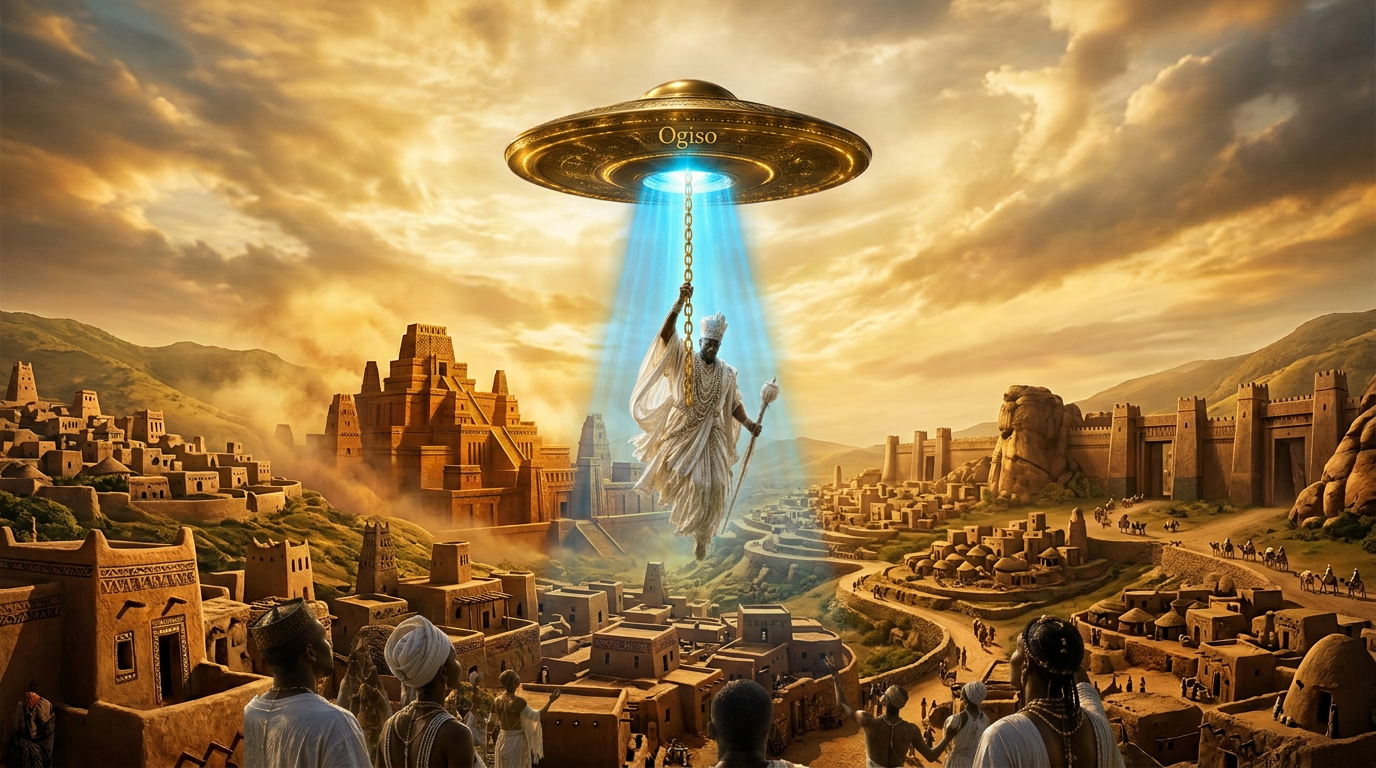
Ogiso means “king from the sky” or “king of the sky,” and Obatala was known as the father of the sky. Ogiso Igodo was also known as Obagodo, and the Oba prefix may have been derived from Obatala — or Igodo could have been Obatala himself, or an avatar of him.
Both of their mythological stories are synonymous. The Edo tradition of origin holds that initially there was no land on earth. Accordingly, Osanobua requested three sons to descend from the sky in a canoe. One son, named Igodo, created land by pouring sand contained in a snail shell on the water, and Osanobua made him king of the Edo and of the world. Some traditions say Igodo was thought to have come from the sky due to his great wisdom.
In Yoruba tradition, Obatala is described in the same narrative. The Edo Osanobua is equivalent to the Yoruba Olodumare, and two of the three sons that Osanobua — Olodumare — sent were likely Obatala and Oduduwa. Obatala also carries the quality of an elder’s wisdom.
Obatala would have been the first emperor of the region during the Ogiso and Ife dynasties, and Oduduwa would later take the throne from him, creating the second dynasty of Ife and later the Eweka dynasty of Benin, as well as Oyo, through his son Oranmiyan.
The Shining Ones
The founder of the Ogiso dynasty from whom Oduduwa descends is Ogiso Igodo, but his birth name was Obagodo. The word Oba must also be of Benin origin, because Ogiso Obagodo ruled between 40 BCE and 36 CE.
In the Edo language, Oba means to brighten, shine or sparkle. Obagodo means “he is shining very bright.”
The Ogiso were described as having mystical powers, and the Elohim, Anunnaki and Irunmole are often described as “the shining ones.” This is synonymous with Ogiso Obagodo, who was likely an Orisha — an Irunmole incarnate — or a descendant of an Irunmole and human union.
This divine DNA was passed down to Oduduwa, to Oranmiyan, and ultimately to the Yoruba and Benin people who hold royal ties, as well as to many other African groups who share similar oral traditions.
Benin and Yoruba do not fall short of stories of giants. The Benin and Yoruba share the same divine ancestors; we are of one and the same stock.
A Note on Speculation
I want to say again that much of what is written here is speculative theory, offered to invoke thought and conversation about what we know of our ancestors. I do not wish to be blasphemous or offensive to the culture. But it is the 21st century, and we have access to knowledge and history that those before us did not, so it would be counterproductive not to seek answers in this new age. Our ancestors would want us to put the puzzle together.
The “ghost ancestor” that international scientists are trying to discover is no ghost to us at all. The Benin and Yoruba are children of Oranmiyan. Though both cultures have evolved into their own individual identities, their sibling bond can always be cultivated. We are not children of ghosts — we are children of the Elohim, the Anunnaki, the Neteru, the Nommos, the Irunmole, the Orisha, and whatever other divine name you wish to call them. We are the children of the sky.