


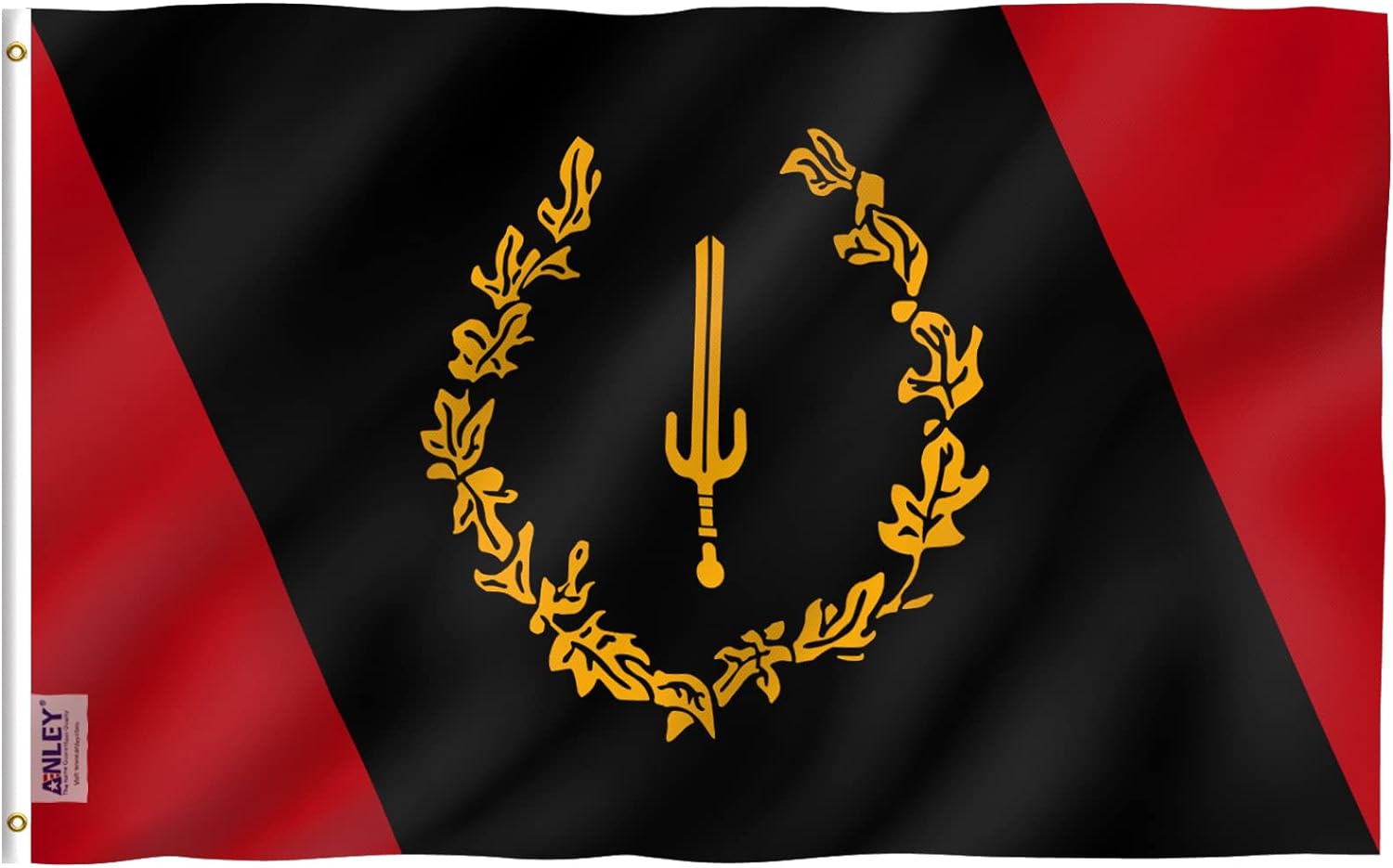


c. 1390 – 1914
Kongo Empire
A centralised Central African kingdom with an elected monarch, a provincial civil service, its own currency and, from 1491, a diplomatic correspondence with Rome and Lisbon written in its own hand.
Central Africa — DR Congo, Republic of Congo, Angola, Gabon
All empires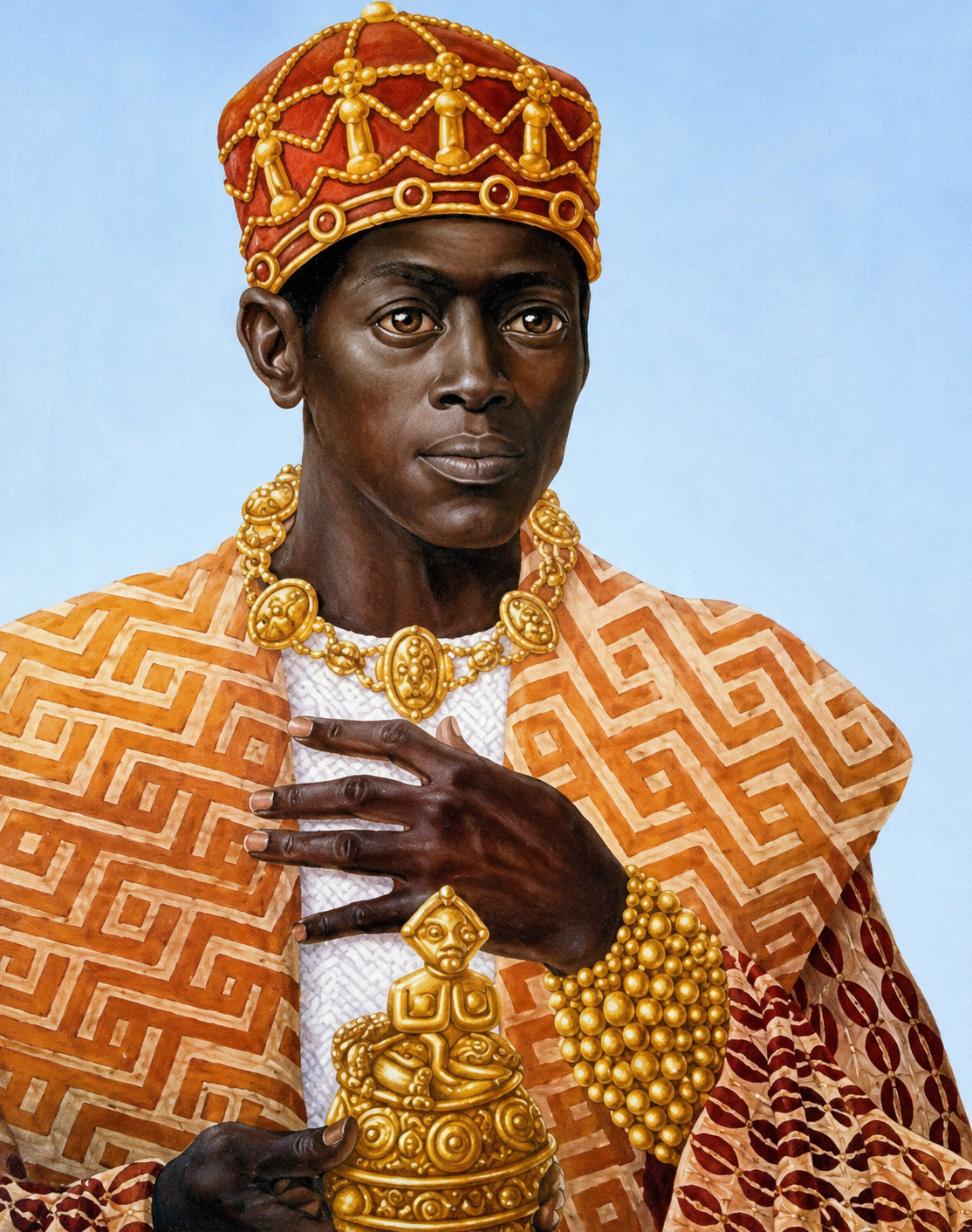
- Capital
- Mbanza Kongo, renamed São Salvador
- Sovereign
- The Manikongo, elected by a council of governors
- Currency
- Nzimbu shells from Luanda Island; raffia cloth as a second medium
- Provinces
- Mpemba, Soyo, Mbamba, Mbata, Nsundi, Mpangu
Deep history
Foundation
Lukeni lua Nimi crossed the Congo River around 1390 and founded a capital on a plateau above the Luezi valley. The kingdom that grew from it fused conquered and allied provinces into a single administration with appointed governors, a court judiciary and taxation collected in nzimbu shells — a monetised state whose royal monopoly on the shell fisheries of Luanda functioned as monetary policy.
The Portuguese arrival
Diogo Cão reached the mouth of the Congo in 1483. Manikongo Nzinga a Nkuwu was baptised as João I in 1491, and his son Mvemba a Nzinga ruled from 1509 as Afonso I. Afonso corresponded in Portuguese with King Manuel I and with the papacy, sent students to Lisbon, and had his own son Henrique consecrated in 1518 as the first Black bishop of the Catholic Church in the modern era. His letters of the 1520s protest bitterly against Portuguese traders depopulating his kingdom through the slave trade — the earliest sustained African critique of the Atlantic trade in the written record.
Kongo cosmology
The dikenga, the Kongo cosmogram, sets a cross within a circle: the sun's course through dawn, noon, dusk and midnight, the living world above and the ancestral world of the dead below, divided by the water of Kalunga. Nkisi power objects, minkondi nail figures and the funerary practice of the bakulu belong to this system. Carried into the Americas, the cosmogram reappears in ring shouts, in yard shrines and in the ground-marked crosses of the Deep South and the Caribbean.
Mbwila and after
Rivalry over succession and Portuguese ambitions in Angola led to the battle of Mbwila in 1665, where Manikongo António I was killed and the kingdom split among competing houses. Kimpa Vita, a young noblewoman also called Dona Beatriz, preached from 1704 that Christ and the saints were Kongolese and that the capital must be restored; her Antonian movement reoccupied São Salvador and she was burned as a heretic in 1706 at twenty-two. Pedro IV reunified the throne in 1709. A diminished Kongo persisted until Portugal abolished the monarchy after the 1914 revolt.
The diaspora
A very large share of Africans taken to the Americas embarked from Kongo and Angola. Kikongo-derived words, the Kongo cosmogram, ring dances and burial practice run through Cuban Palo Mayombe, Brazilian Candomblé de Angola and Congo, Haitian Petwo rites and Gullah Geechee tradition on the Carolina and Georgia coast.
Paternal lineages
E1b1a (E-M2) is dominant among Bakongo and neighbouring Bantu-speaking populations, with haplogroup B lineages persisting among Central African forager peoples of the same forests.
Other empires
Kemet
c. 3150 BCE – 30 BCE
Egypt & Nubia, the Nile Valley
Axum
c. 100 CE – 940 CE (roots to D'mt, c. 980 BCE)
Ethiopia & Eritrea, the Horn of Africa
Mali Empire
c. 1235 – 1670
Western Sudan — Mali, Senegal, Guinea, Gambia, Mauritania
Oyo Empire
c. 1300 – 1896
Yorubaland — south-western Nigeria and Benin
The Moors
711 – 1492 and beyond
North Africa, the Sahel, Borgu, Mali and Iberia