


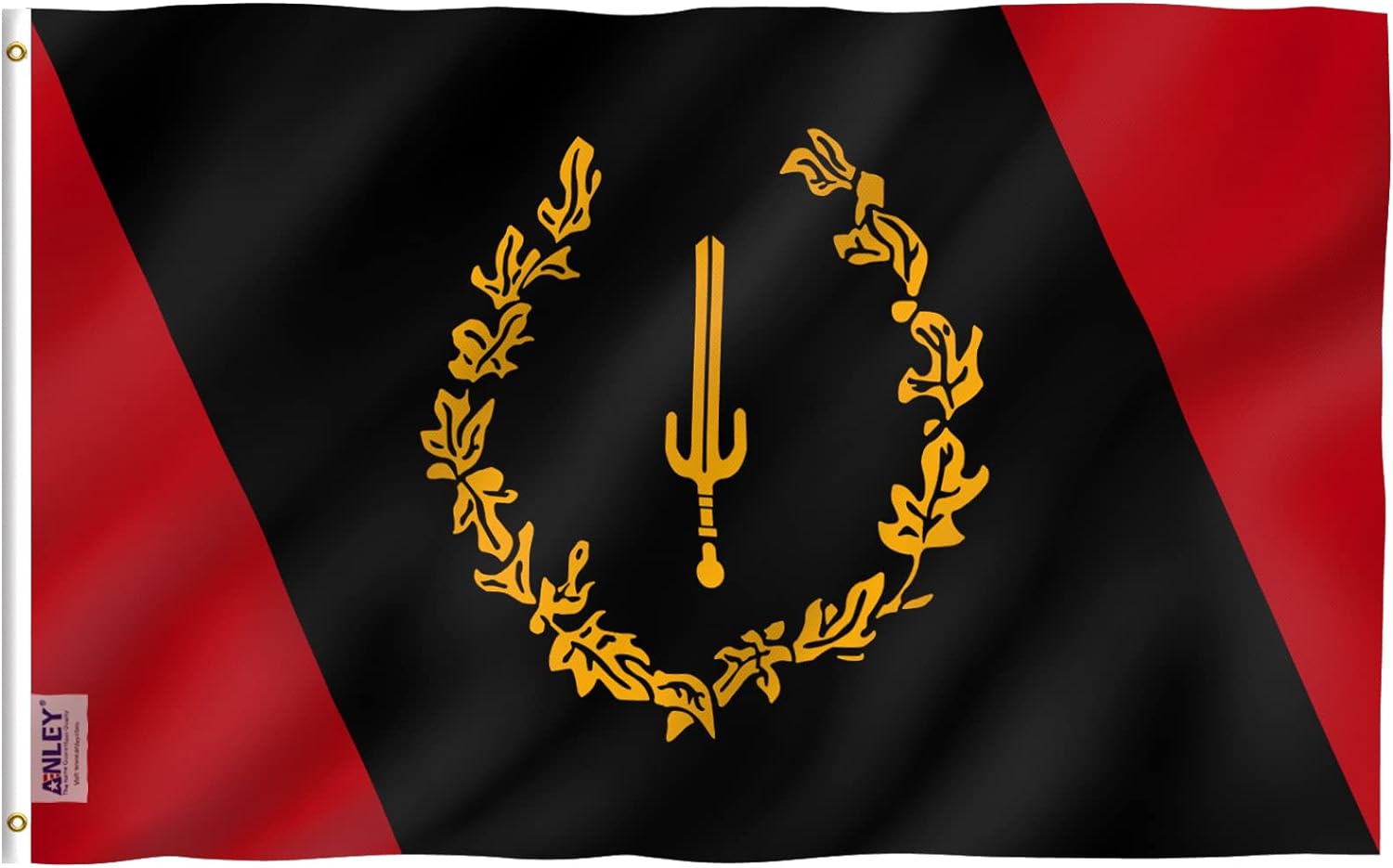


c. 3150 BCE – 30 BCE
Kemet
The Black Land of the Nile: the longest continuous state tradition in recorded history, and the civilisation that set the terms for writing, monumental architecture and sacred kingship in the ancient world.
Egypt & Nubia, the Nile Valley
All empires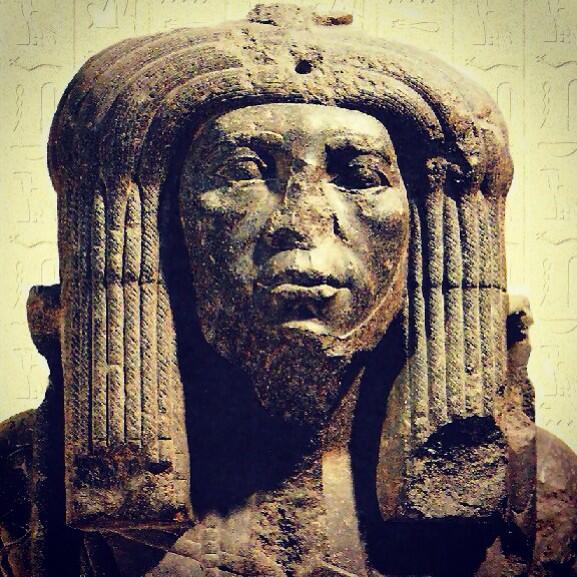
- Indigenous name
- Kemet — “the Black Land”, for the dark alluvial soil of the Nile flood
- Capitals
- Memphis, Thebes (Waset), Amarna, Tanis, Napata, Meroë
- Writing
- Medu Neter (hieroglyphs), hieratic, demotic, later Meroitic
- Peak extent
- From the Levant to the Fourth Cataract under the New Kingdom
Deep history
The unification
Before the state there were two lands: Upper Kemet, the narrow river valley stretching south towards Nubia, and Lower Kemet, the broad delta opening onto the Mediterranean. Around 3150 BCE a southern ruler remembered as Narmer or Menes bound them together, and every pharaoh afterwards wore the double crown as a statement that the two lands were held in one hand. Predynastic cultures at Naqada, Badari and Nabta Playa had already established the astronomy, cattle ritual and burial practice the unified state would inherit; Nabta Playa in the Nubian desert holds a stone calendar circle older than Stonehenge.
Old Kingdom: the age of stone
The Third to Sixth Dynasties (c. 2686–2181 BCE) built in stone on a scale no society had attempted. Imhotep, vizier to Djoser, raised the Step Pyramid at Saqqara and was later deified as a patron of medicine and architecture. Sneferu's engineers solved the geometry of the true pyramid at Dahshur, and Khufu's builders at Giza set roughly 2.3 million blocks on a base level to within a few centimetres and aligned to true north with an error of a fraction of a degree. The Pyramid Texts of Unas, carved around 2350 BCE, are the oldest religious writings on earth.
Middle and New Kingdoms
The First Intermediate Period broke central authority; Mentuhotep II of Thebes restored it. The Middle Kingdom pushed fortresses deep into Nubia at Buhen and Semna and produced the literature — the Tale of Sinuhe, the Instructions — that later scribes copied for two thousand years. After the Hyksos interlude, Ahmose I opened the New Kingdom (c. 1550–1069 BCE), the imperial age of Hatshepsut's expedition to Punt, Thutmose III's campaigns into Syria, Akhenaten's solar heresy at Amarna, Tutankhamun's restoration and Ramesses II's seventy-year reign.
Nubia and the Black pharaohs
Kemet was never separate from Africa to its south. Ta-Seti, the Land of the Bow, produced the A-Group rulers of Qustul whose incense burner carries royal iconography arguably older than the Egyptian dynastic record. Kerma became a rival power on the Upper Nile with its own vast mudbrick deffufa temples. In 747 BCE the Kushite king Piye marched north from Napata and took the whole valley; his Twenty-Fifth Dynasty — Piye, Shabaka, Shebitku, Taharqa, Tanwetamani — revived pyramid building, restored the temples and ruled from the Delta to the Fourth Cataract. When Assyria pushed them south, the court withdrew to Meroë, where the kingdom developed its own alphabet, worshipped the lion god Apedemak, was ruled repeatedly by queens titled Kandake, and produced more pyramids than Egypt itself.
Knowledge and the sacred
The Ebers and Edwin Smith papyri record surgical procedure, diagnosis and pharmacology with a clinical structure recognisable today. The civil calendar of 365 days, the decan star clocks, the 24-hour division of the day and the mathematics of the Rhind papyrus all belong to this tradition. Ma'at — truth, balance, reciprocity — was the principle a king was judged by, weighed against the heart in the hall of judgement described in the Book of Coming Forth by Day.
The long ending
Persian conquest in 525 BCE, Alexander in 332 BCE, the Ptolemies, then Roman annexation in 30 BCE ended dynastic rule but not the culture: temples at Philae kept the old rites into the sixth century CE, and Meroë endured until Axum's rise. The lineages of the valley, above all E1b1b (E-M78) and E1b1a with A and B lineages among Nilotic populations upstream, still map the corridor along which this civilisation moved.
Paternal lineages
E1b1b (E-M78) dominates the Nile Valley record; A and B lineages remain frequent among Nilotic populations of the Upper Nile, with E1b1a carried south and west.
Other empires
Axum
c. 100 CE – 940 CE (roots to D'mt, c. 980 BCE)
Ethiopia & Eritrea, the Horn of Africa
Mali Empire
c. 1235 – 1670
Western Sudan — Mali, Senegal, Guinea, Gambia, Mauritania
Oyo Empire
c. 1300 – 1896
Yorubaland — south-western Nigeria and Benin
Kongo Empire
c. 1390 – 1914
Central Africa — DR Congo, Republic of Congo, Angola, Gabon
The Moors
711 – 1492 and beyond
North Africa, the Sahel, Borgu, Mali and Iberia